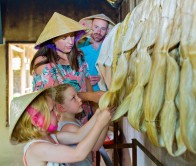
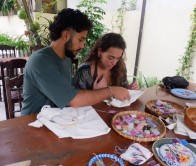
Hoi An Traditional Craft Classes & Workshops – Discover Hoi An’s Hidden Cultural Gems
Hoi An’s charm extends far beyond its ancient town. Venture into the surrounding countryside, and you’ll discover a world of traditional craft villages, where time-honored skills and artistic traditions are kept alive. These villages offer a fascinating glimpse into Vietnam’s cultural heritage and a chance to connect with local artisans. Here’s your guide to the most captivating handicraft classes and workshop tours around Hoi An.
There is another Hoi An waiting beyond the lantern-lit streets of the Ancient Town. Follow the narrow countryside roads, cross the Thu Bon River, and you will find villages where clay, wood, bamboo, silk, and fresh herbs have been transformed into beautiful everyday objects for generations.
These traditional craft villages are more than sightseeing stops. They are places where you can meet local artisans, watch time-honored techniques in action, and sometimes sit down and make something with your own hands. That makes Hoi An traditional craft classes and workshops a wonderful choice for travelers who want to experience the city’s culture rather than simply photograph it.
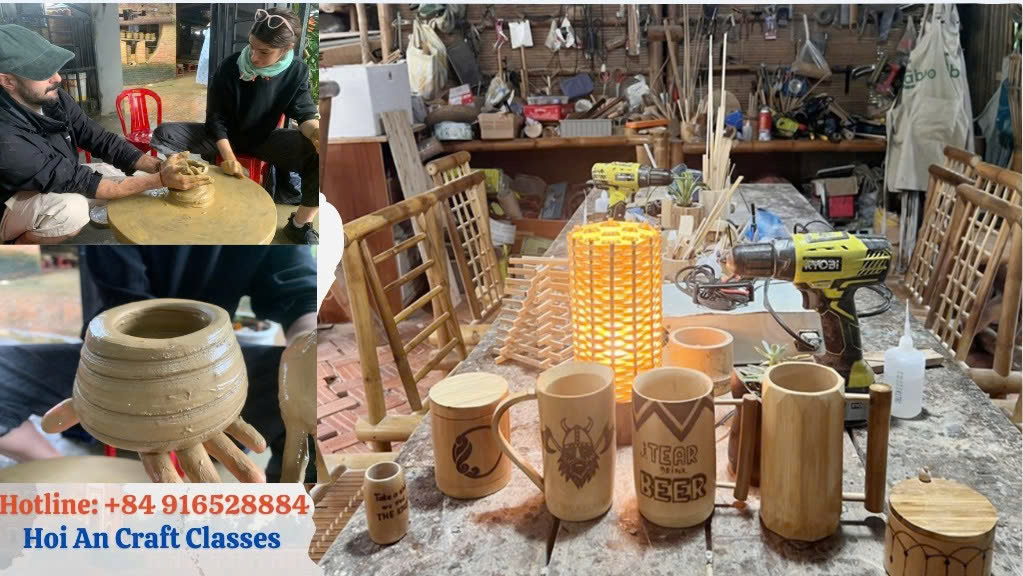
From shaping a piece of clay at Thanh Ha to learning how bamboo becomes a useful household object, each experience tells a different story about local life. Here are some of the most interesting handicraft classes and workshops in Hoi An to consider for your trip.
For further information about Hoi An tours, you can contact the hotline 0916528884 (Ms. Tina).
Why Join a Hoi An Craft Class or Workshop?
Hoi An is famous for its preserved architecture and colorful lanterns, but its cultural identity was shaped by much more than its Ancient Town. Farming, woodworking, pottery, weaving, fishing, boat building, and other traditional skills remain an important part of the surrounding communities.
A workshop gives you the opportunity to slow down and see how these traditions work. Instead of simply buying a finished souvenir, you can learn about the process behind it and, in some cases, make your own version to take home.
These experiences are particularly enjoyable for families, couples, photographers, creative travelers, and anyone looking for an alternative to the usual Hoi An sightseeing itinerary.
Thanh Ha Pottery Village: Get Your Hands Into the Clay
Just a short journey from Hoi An Ancient Town, Thanh Ha Pottery Village is one of the city’s best-known traditional craft destinations.
The village has a long history of pottery production, and its workshops provide a fascinating introduction to the relationship between local artisans and clay. Walking through the village, you can see pottery at different stages of production and watch craftsmen transform a simple lump of earth into a functional or decorative object.
What Can You Experience at Thanh Ha?
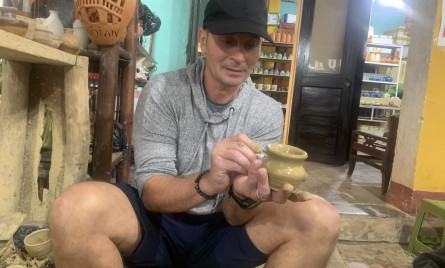
- Try a pottery workshop: Sit at the wheel, work with clay, and create a small handmade piece under the guidance of a local artisan.
- Watch traditional pottery techniques: Observe how experienced craftspeople shape, dry, decorate, and fire their creations.
- Visit the Terracotta Park: Explore an unusual collection of terracotta models inspired by famous landmarks from around the world.
- Browse handmade pottery: Choose from locally produced bowls, decorative pieces, figurines, and other ceramic products.
How to Visit Thanh Ha Pottery Village
There are several enjoyable ways to reach the village. A cycling tour allows you to enjoy the countryside at a relaxed pace, while a boat trip along the Thu Bon River provides a scenic approach from the water.
You can also choose a combined cultural itinerary that connects Thanh Ha with other traditional villages and attractions around Hoi An.
Kim Bong Carpentry Village: Discover the Art of Vietnamese Woodworking
Across the Thu Bon River lies Kim Bong Carpentry Village, a destination where woodwork and Hoi An’s history come together.
The village is known for its generations of skilled carpenters. Their work includes furniture, decorative objects, architectural details, sculptures, and traditional boats. The craftsmanship is especially interesting because woodworking has played an important role in the development of Hoi An’s historic buildings and river-based trade.
What to Look For in Kim Bong
- Watch master carpenters: See how raw timber is measured, cut, carved, and shaped into detailed objects.
- Explore the village’s history: Learn about traditional woodworking and its connection to Hoi An’s architecture and boat-building culture.
- Meet local craftspeople: A conversation with an artisan can give you insights that you simply cannot get from a museum display.
- Shop for handmade products: Small wooden decorations and handcrafted items can make meaningful souvenirs.
Ways to Explore Kim Bong Carpentry Village
A walking tour gives you time to explore workshops at a relaxed pace and observe village life. Alternatively, some boat tours incorporate Kim Bong into a river itinerary, allowing you to arrive by water and enjoy views of the Thu Bon River along the way.
If woodworking is a particular interest, consider a more focused or customized experience that gives you additional time with local craftsmen.
Tra Que Vegetable Village: Where Farming Becomes a Cultural Experience
Not every traditional Hoi An workshop involves clay or wood. At Tra Que Vegetable Village, the craft is farming itself.
Located amid lush fields and countryside scenery, Tra Que is known for its fresh herbs and vegetables. The village offers visitors a chance to see how local farmers cultivate the ingredients that appear on tables throughout Hoi An.
For travelers interested in food, agriculture, and sustainable living, a Tra Que experience can be one of the most rewarding activities outside the Ancient Town.
What Happens on a Tra Que Experience?
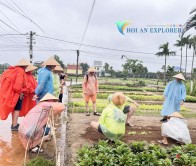
- Learn about traditional farming: Discover how local farmers prepare and care for their vegetable gardens.
- Join hands-on gardening: Depending on the program, you may participate in activities such as planting, watering, or harvesting.
- Explore local herbs: Learn why aromatic herbs and vegetables are so important to Vietnamese cuisine.
- Combine farming with cooking: Some experiences continue from the garden to the kitchen, allowing you to prepare Vietnamese dishes using fresh local ingredients.
Tra Que Tour Options
A cycling trip through the countryside is an enjoyable way to reach Tra Que. For a deeper experience, choose a farming-focused tour where you can spend more time with local farmers.
You can also combine gardening with a Tra Que cooking class and discover how ingredients move from the soil to the dining table.
Hoi An Lantern Making Workshop: Create a Symbol of the City
Few objects are more closely associated with Hoi An than its colorful lanterns. When evening arrives, the streets and riverside become a glowing display of silk-covered frames in different shapes and colors.
Instead of simply buying one, why not learn how it is made?
A Hoi An lantern making workshop introduces you to the basic construction and decoration of these iconic objects.
With guidance from local artisans, you can work with the frame, fabric, and decorative elements to create a lantern of your own. It is a hands-on souvenir with a personal story behind it.
This type of workshop is especially popular with families and couples because the activity is creative without requiring previous crafting experience.
Bamboo Craft Workshop: Experience the Versatility of Bamboo
Bamboo is one of the most recognizable natural materials in traditional Vietnamese life. It can be transformed into baskets, household tools, decorative pieces, furniture, and many other useful objects.
A Hoi An bamboo workshop provides an opportunity to discover the skill involved in turning simple bamboo into practical and attractive products.
Rather than rushing through a souvenir shop, you get to understand the hands-on work behind traditional crafts. The experience can also provide a new appreciation for natural materials and the resourcefulness of Vietnamese rural communities.
Silk Weaving and Embroidery: Follow the Story from Silk to Fabric
Hoi An has a long connection with textiles and tailoring, making silk another fascinating part of the local craft scene.
A Hoi An silk weaving and embroidery workshop can introduce you to the delicate processes behind silk production and traditional textile work.
Depending on the experience, you may learn about silkworm cultivation, silk processing, weaving, embroidery, and the creation of finished fabrics.
For anyone interested in fashion, textiles, Vietnamese handicrafts, or traditional production methods, this is a quieter and more detailed experience than many conventional sightseeing tours.
Combine Craft Villages with a Hoi An Cooking Class
Crafts and food may seem like completely different parts of Vietnamese culture, but they are closely connected by one idea: tradition passed from one generation to another.
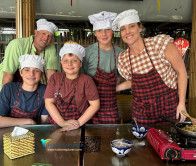
A Hoi An cooking class can be combined with a countryside or craft-village itinerary to create a fuller cultural experience.
You might begin by exploring local farms, visit a traditional village, and then finish in the kitchen preparing Vietnamese dishes. This approach lets you experience not only what people in Hoi An eat, but also where some of the ingredients and traditions come from.
Cam Thanh Cooking Class
A Cam Thanh cooking class is a natural choice if you want to combine cooking with rural scenery. The coconut-palm waterways and countryside atmosphere provide a peaceful setting for learning about Vietnamese cuisine.
Hoi An Vegetarian Cooking Class
Plant-based travelers can also consider a Hoi An Vegetarian Cooking Class. Fresh herbs, vegetables, tofu, mushrooms, noodles, and sauces become the foundation for flavorful Vietnamese dishes.
Combine Traditional Crafts with a Hoi An Farming Tour
If you want to spend more time in the countryside, a Hoi An farming tour is another excellent option.
Rather than simply visiting a village as a spectator, you can participate in everyday rural activities and learn how agriculture has shaped local communities. It is particularly rewarding for travelers who want to understand the origins of the herbs, vegetables, and other ingredients used in Hoi An cuisine.
For an even more memorable countryside adventure, consider a Hoi An Buffalo Riding and Wet Rice Tour with Cooking Class, which combines traditional agricultural life with a hands-on food experience.
How to Choose the Best Hoi An Craft Workshop
With so many options available, choosing the right experience depends largely on your interests and the amount of time you have.
Choose According to Your Interests
If you love ceramics, start with Thanh Ha. Interested in architecture and woodworking? Kim Bong is a natural fit. For food lovers, Tra Que and cooking experiences offer more opportunities to connect culture with cuisine.
Think About Transportation
Cycling is ideal for travelers who want to enjoy the countryside slowly. Boats are particularly atmospheric when visiting villages along the Thu Bon River. Walking is best when you want plenty of time to stop, photograph workshops, and speak with local artisans.
Allow Enough Time
A craft village is not something you need to rush through in twenty minutes. The charm is in watching the process, talking with artisans, and noticing the small details.
If possible, allow several hours for a workshop or combine two nearby experiences rather than trying to visit too many destinations in one day.
Consider Small-Group Experiences
Smaller groups generally make hands-on workshops more enjoyable because you have more opportunities to ask questions and receive guidance from the artisan or instructor.
What to Bring to a Hoi An Craft Class
- Comfortable clothing: Some workshops involve clay, dust, water, or outdoor activities.
- Closed-toe shoes: These are useful for countryside visits and practical workshops.
- Sun protection: Bring sunscreen, a hat, and water when cycling or spending time outdoors.
- Your camera: Traditional workshops offer plenty of interesting details and authentic photo opportunities.
- Curiosity: The most valuable thing to bring is an interest in learning from local artisans.
When Is the Best Time to Explore Hoi An Craft Villages?
Craft villages can generally be incorporated into a Hoi An itinerary throughout the year, but the experience can feel very different depending on the weather.
For outdoor activities such as cycling, farming, and walking between workshops, cooler morning hours are usually more comfortable. Morning visits can also give you a chance to see artisans and vendors beginning their working day.
If your itinerary includes several activities, consider combining a countryside workshop in the morning with a relaxed afternoon in Hoi An Ancient Town.
Make Your Hoi An Trip More Than a Sightseeing Checklist
The beauty of Hoi An’s traditional craft villages lies in their simplicity. There are no enormous attractions or elaborate theme-park rides. Instead, you find a potter patiently shaping clay, a carpenter carving wood, a farmer tending vegetables, or an artisan carefully assembling a lantern.
These small moments reveal another side of Vietnam—one built around patience, skill, family knowledge, and respect for traditional crafts.
So, when planning your next Hoi An tour, leave some space beyond the Ancient Town. Ride through the countryside, cross the river, get your hands dirty, and talk to the people who keep these traditions alive.
Whether you choose a pottery workshop, lantern making class, Kim Bong carpentry experience, bamboo workshop, silk tour, or a farming and cooking adventure, you will return with more than photographs.
You will take home a little piece of Hoi An’s living heritage—and perhaps something you made yourself.
YOU MAY LIKE IT
Hoi An Traditional Handicrafts Classes And Workshop
Hoi An, a UNESCO World Heritage Site, is not only a historical town but also a vibrant center for traditional handicrafts. The town’s skilled artisans have been preserving these age-old...