Exploring the Aromatic Herbs of Tra Que Vegetable Village in Hoi An
Just a short journey from Hoi An Ancient Town, Tra Que Vegetable Village is a peaceful green corner of Central Vietnam where farming traditions and Vietnamese cuisine come together.
Walk through the village and you will quickly notice that it is not simply a place where vegetables are grown. The air is filled with the fresh fragrance of herbs, while neat garden beds stretch across the countryside. Many of these herbs appear every day on Vietnamese dining tables, adding distinctive aromas, fresh textures and layers of flavor to local dishes.
Beyond cooking, herbs have long been connected with everyday life in Vietnam. Some are traditionally used in herbal drinks and home remedies, while others are valued simply for their refreshing flavors and cultural importance.
For any further information about Hoi An Explorer Tours, please get in touch with the hotline 0916528884 (Ms Tina)

Why Are the Herbs of Tra Que Vegetable Village So Special?
Tra Que has become famous for its fresh vegetables and aromatic herbs because of generations of traditional farming knowledge. Local farmers carefully cultivate their crops in fertile soil and use natural methods that help maintain the quality and flavor of the produce.
The herbs grown here are an important part of Hoi An’s culinary identity. When you enjoy dishes such as Cao Lau, fresh spring rolls, local salads or grilled specialties, fresh herbs often provide the final touch that makes the flavors feel unmistakably Vietnamese.
A visit to Tra Que lets you see this process at its source rather than experiencing Vietnamese food only from a restaurant table.
Fragrant Herbs to Discover in Tra Que Vegetable Village
Vietnamese Mint – Rau Răm
Vietnamese mint, commonly known as rau răm, is one of the familiar fresh herbs found throughout Vietnamese cuisine. It has a distinctive peppery, slightly spicy character with a refreshing aroma.
It can be served with salads, boiled eggs, soups, seafood dishes and spring rolls. Rather than overpowering a dish, a small handful of rau răm can add a surprisingly complex herbal note.
When walking around Tra Que, look closely at the herb beds and you can see how these small plants become an important part of everyday Vietnamese meals.
Discover more: Tra Que Herb Village – Experience Being a Real Farmer and Cooking Class.
Thai Basil – Húng Quế
Thai basil, or húng quế, is instantly recognizable thanks to its fragrant leaves and subtle anise-like aroma. It is particularly popular when served alongside noodle dishes, soups and other Vietnamese specialties.
Pick up a fresh leaf and gently crush it between your fingers, and the characteristic fragrance becomes even stronger. It is a simple reminder of how much Vietnamese cuisine depends on fresh herbs rather than heavy seasoning alone.
Coriander – Rau Mùi
Coriander, called rau mùi in Vietnamese, is another essential herb. Its bright aroma and citrus-like freshness work beautifully with soups, noodles, dipping sauces and salads.
For many visitors, the smell of coriander is one of the first aromas they associate with Vietnamese food. It is often added at the end of preparation, allowing its fresh character to remain noticeable.
Lemon Balm – Húng Chanh
Húng chanh has a refreshing citrus fragrance that makes it an interesting addition to Vietnam’s collection of aromatic plants. Its leaves can be used in certain soups, salads and grilled preparations.
Traditionally, húng chanh has also been associated with home remedies and herbal preparations. Like many Vietnamese herbs, it occupies a space between food and traditional household knowledge.
Perilla – Tía Tô
Perilla, or tía tô, is one of the most visually striking herbs you may encounter in Vietnamese cooking. Depending on the variety, its leaves can feature green surfaces with attractive purple or reddish coloring underneath.
The flavor is equally distinctive, combining herbal, minty and slightly spicy notes. Perilla is commonly eaten fresh, used as a wrap or added to soups and other dishes where its fragrance can stand out.
For visitors exploring Tra Que, it is worth stopping for a moment to look at the different shapes and colors of the leaves growing throughout the gardens.
Vietnamese Balm – Kinh Giới
Kinh giới, or Vietnamese balm, has a strong aromatic profile and is commonly served as part of Vietnamese herb plates. Its flavor can be quite pronounced, so it is generally enjoyed in smaller quantities alongside other ingredients.
Fresh herbs such as kinh giới are especially important to the way Vietnamese meals are eaten. Rather than being mixed into every dish during cooking, they are often placed on the table so diners can add them according to their own taste.
Fish Mint – Diếp Cá
Fish mint, known as diếp cá, is perhaps one of the most memorable Vietnamese herbs for first-time visitors. Its unusual aroma and distinctive flavor are not for everyone, but locals appreciate it as part of a varied herb platter.
It can be eaten fresh with salads and grilled foods or used as a wrap with other ingredients. If you have never tried it before, Tra Que is a fun place to experience this unique herb directly at the source.
Tra Que Herbs: More Than Ingredients for Vietnamese Food
The story of Tra Que’s herbs goes beyond the kitchen. Plants have traditionally been part of everyday Vietnamese life, from cooking and herbal drinks to traditional household practices.
Walking through the village gives you a chance to see how closely food and agriculture are connected. A simple herb that appears as a garnish in a restaurant may have been planted, cared for and harvested by a local farmer only a short distance away.
For travelers looking to experience this connection firsthand, a Tra Que Farming Tour and Spa Massage can combine a countryside farming experience with time to relax.
Experience the Herbs on a Tra Que Farming Tour
One of the best ways to understand Tra Que is to get your hands dirty.
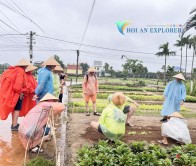
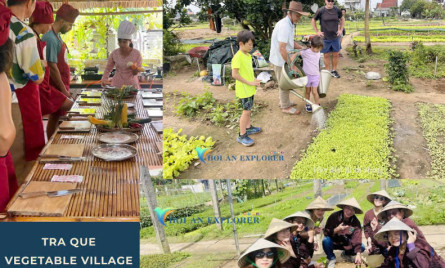
Instead of simply walking through the village and taking photographs, join a local farming experience. Depending on the program and season, you may learn about planting, watering, harvesting or traditional cultivation techniques.
These activities offer a closer look at the work behind the fresh vegetables and herbs served in Hoi An restaurants every day.
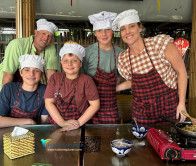
For travelers interested in food and culture, a Tra Que vegetable cooking class is another excellent option. You can discover local ingredients in the garden before learning how they are incorporated into Vietnamese recipes.
Join a Tra Que Cooking Class and Taste the Difference
Seeing herbs growing in the garden is interesting. Tasting them in a freshly prepared Vietnamese dish is even better.
A Tra Que cooking class allows you to move from the garden to the kitchen and discover how fresh herbs influence Vietnamese flavors.
You may learn how to prepare vegetables, herbs, sauces and other ingredients before cooking traditional dishes under the guidance of a local instructor. The experience gives you a practical understanding of why fresh herbs are such an important part of meals in Hoi An.
It is also an excellent activity for travelers who want something more personal than sightseeing. You are not simply looking at Vietnamese culture; you are participating in it.
Traditional Farming and Sustainable Practices in Tra Que
Another reason Tra Que is fascinating is its relationship with traditional agriculture. Local farming knowledge has been passed from one generation to another, helping preserve the character of the village while supplying fresh produce to the surrounding area.
Natural farming practices have historically played an important role in Tra Que’s agricultural identity. Seaweed and other locally sourced organic materials have been used as natural fertilizer, supporting the cultivation of vegetables and herbs while making use of resources available in the surrounding environment.
This relationship between the land, water and farming traditions is part of what gives the village its special character.
What Can You Do at Tra Que Vegetable Village?
You do not need to spend an entire day simply looking at vegetable gardens. There are several ways to turn a visit into a memorable Hoi An countryside adventure.
- Walk through the herb gardens: Explore rows of fresh vegetables and aromatic plants while learning about local farming.
- Meet local farmers: Hear about traditional cultivation methods and the daily work involved in producing fresh herbs.
- Join a farming experience: Try simple agricultural activities and experience countryside life firsthand.
- Take a cooking class: Learn how fresh Tra Que ingredients are transformed into Vietnamese dishes.
- Enjoy a relaxing massage: Combine your farming experience with a traditional-style spa treatment.
- Take photographs: The neat garden beds, green fields and rural scenery provide a peaceful alternative to the busy Ancient Town.
When Is the Best Time to Visit Tra Que?
Tra Que is a year-round destination, but the experience can feel different depending on the weather and farming season.
Early morning is particularly appealing if you want cooler temperatures and a glimpse of local agricultural activity. The soft morning light also creates beautiful conditions for photographs.
If you plan to join a farming or cooking activity, check the schedule when booking because activities and available ingredients can vary according to the season.
Why Tra Que Is a Must-Visit for Food Lovers
Hoi An is famous for its food, but the story of local cuisine begins long before a dish reaches your table. Fresh herbs and vegetables grown around the countryside provide the aromas, colors and textures that make Central Vietnamese cooking so distinctive.
Tra Que gives you the opportunity to see that story unfold.
You can walk among fragrant herbs, talk with farmers, learn traditional cultivation methods and then sit down to taste dishes prepared with ingredients from the surrounding countryside. It is a simple but meaningful way to understand Hoi An through food.
A Sensory Journey Through Tra Que’s Herb Gardens
Exploring the herbs of Tra Que Vegetable Village is ultimately a journey for all the senses.
You see neat green rows stretching across the fields. You smell basil, mint and other aromatic plants in the warm countryside air. You touch freshly harvested leaves. You taste herbs that you may never have encountered before. And, perhaps most importantly, you meet the people who continue the agricultural traditions that have shaped this part of Hoi An.
For travelers who want to experience more than the lanterns and historic buildings of Hoi An Ancient Town, Tra Que offers a refreshing change of pace. It brings together farming, food, culture and nature in one beautiful countryside setting.
Plan Your Tra Que Vegetable Village Experience
If you are visiting Hoi An and love Vietnamese food, make time to explore the green side of the city. A Tra Que Vegetable Village tour is an opportunity to discover the herbs behind some of Hoi An’s most memorable dishes while experiencing traditional rural life.
For an even deeper experience, combine a farming activity with a Tra Que cooking class, or choose the Tra Que farming tour and spa massage for a balance of countryside adventure and relaxation.
Whether you are a dedicated food lover, a curious traveler or simply someone who enjoys getting away from the crowds, the aromatic gardens of Tra Que offer a memorable glimpse into the living traditions of Hoi An.
Contact Hoi An Explorer Tours via WhatsApp to plan your Tra Que countryside and culinary adventure.
YOU MAY LIKE IT
Nighttime Tra Que Cooking Class – A Magical Vietnamese Culinary Experience Under the Stars
When the sun begins to disappear behind the countryside around Hoi An, Tra Que Vegetable Village takes on a completely different atmosphere. The gardens become quieter, the air feels cooler,...